
 Contact Us At
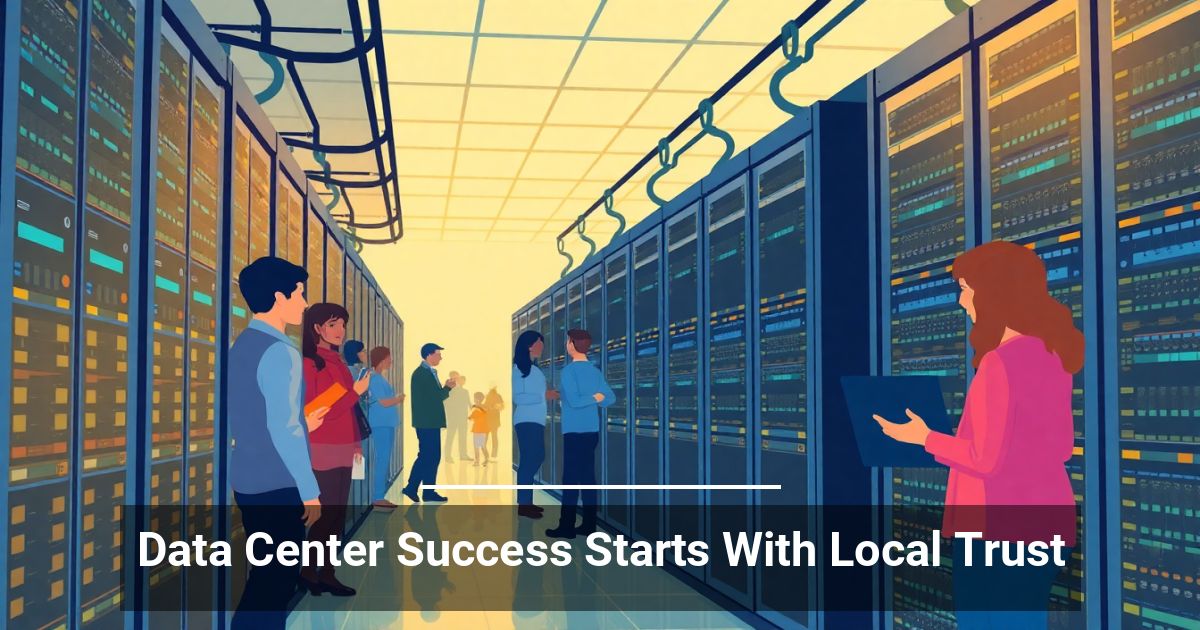 As artificial intelligence drives demand for more computing power, data centers are expanding at a remarkable pace. However, the challenges of building data centers are no longer limited to resources. Reliable energy still matters, but the primary roadblock has more to do with local data center trust than demand on the power grid or cooling.
The fact is, unless a data center developer can navigate local planning risk and address local community concerns, it doesn’t matter if their project is technically sound and fully financed. Without trust, the project will face long delays, or maybe never even get off the ground.
Why Community Support Matters More Than Ever
Every major construction project, data center or otherwise, changes the surrounding area in some way. Even though these facilities often operate quietly once completed, nearby residents naturally want to understand what’s being built and why.
Communities want clear answers about how new facilities will affect everything from traffic and noise to water use, energy consumption, and the surrounding environment. More than ever, local officials are paying closer attention to public feedback before approving large developments. As a result, local data center trust has become an essential part of the planning process instead of an afterthought.
Overlooking these concerns is a major factor in public opposition to major projects. And if the community doesn’t support the data center, you can expect lengthy delays and higher costs.
Smart Planning Creates Better Business Outcomes
Businesses that depend on digital infrastructure should recognize that successful infrastructure planning extends beyond construction schedules and technical specifications.
But building community trust isn’t about marketing. It’s about stakeholder collaboration and having open conversations that demonstrate respect for the people who will live and work near the facility for years to come. Strong local community engagement answers their questions before uncertainty turns into resistance. Regular, transparent communication allows data center development teams to explain project operations while allowing residents to raise concerns.
Local Trust Supports Long-Term Growth
It’s common for companies to announce data centers under the umbrella of economic development. Although communities generally aren't opposed to economic development, they want to understand the real economic value new facilities bring. This means looking at indicators that go well beyond construction jobs and tax revenue, including workforce partnerships, educational initiatives, infrastructure improvements, and ongoing community involvement after construction is complete.
In short, communities want real numbers and accountability, not vague promises about what the data center will do for the area. They also want companies that remain engaged with the community after opening. Such continued involvement helps strengthen community trust that supports future expansion opportunities.
Community Engagement Isn't a Phase but a Relationship
The strongest infrastructure planning processes treat local data center trust and engagement as ongoing. That means real stakeholder collaboration with local officials, civic groups, and residents from the earliest site conversations.
Grid capacity and water availability are still major roadblocks for many projects, but strong community support also matters. The projects that actually get built on schedule and without a last-minute lawsuit or a reversed council vote are often the ones where developers treated local community engagement as a core strategy.